
I sat in a church overweight, hating how I looked and felt. I was more focused on my new diet plant then the sermon that I was listening too. Then it hit me. I started looking for health advise in the Bible. Genesis 1:29 stopped me cold that morning. The first meal plan in human history had been sitting in a book I owned my whole life. In fact, I had never once read it as a health book.
That verse is where this entire blog starts. Maybe you are searching Genesis 1:29 because you want to know what seed-bearing plants are. You are in the right place. By the end of this post, you will understand why seed-bearing plants belong at the center of your plate. In fact, God built it to be the foundation of your diet.
Here is the verse in full:
“And God said, ‘Behold, I have given you every plant yielding seed that is on the face of all the earth, and every tree with seed in its fruit. You shall have them for food.'” (Genesis 1:29)
Read that slowly. Before any nation existed, before any diet trend, before any nutrition label, God handed Adam a category of food. He called it good. He did not hand Adam a calorie target or a macro split. Instead, he handed him seed-bearing plants and called that the foundation.
This is not a suggestion buried in the middle of the Bible. It is the first dietary instruction God ever gave a human being. In fact, he gave it on the sixth day of creation. Consequently, if you want to know where food starts, this verse is the starting line.
What Genesis 1:29 Says About Food
A seed-bearing plant is any plant that reproduces through a seed you can see, hold, or plant again. Specifically, Genesis 1:29 breaks this into two categories: “every plant yielding seed” and “every tree with seed in its fruit.” In today’s terms, that covers five groups: fruits, vegetables, beans, seeds, and nuts.
That list is not random. Each of these five categories carries a seed inside it. In fact, that seed carries the same instruction God gave in the garden. Below is what each category includes and why it earns a place on your plate.
Fruits
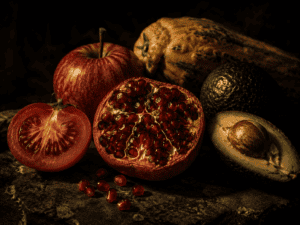
Fruit is the most obvious seed-bearing plant. For example, an apple, a tomato, a squash, and an avocado all carry visible seeds. That makes them fruit in a biblical and botanical sense, even though your grocery store often files them under vegetables. Similarly, berries, oranges, melons, and stone fruit like peaches all belong here too.
Fruit carries fiber, water, and a dense load of phytochemicals. Specifically, these plant compounds fight inflammation and protect your cells from damage. A comprehensive review of vegetable and fruit intake links these foods to a lower risk of cancer and cardiovascular disease (National Institutes of Health). The fiber and antioxidant compounds inside fruit largely explain why. In other words, God built a purpose into the sweetness of fruit.
Stud, maybe you cut fruit from your diet because you heard it carries too much sugar. If so, you cut one of the five categories God specifically named. Whole fruit is not the problem. The fiber inside whole fruit slows down how fast sugar hits your bloodstream. That makes it completely different from a soda or a candy bar. Two cups a day is a reasonable target for most men. For example, that can come from one piece of whole fruit plus a handful of berries on your oatmeal.
Vegetables
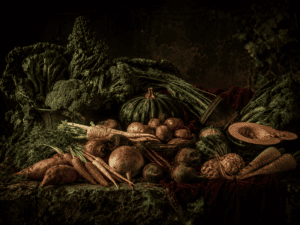
Vegetables round out the “every plant yielding seed” half of Genesis 1:29. Leafy greens, root vegetables, cruciferous vegetables like broccoli and cauliflower, and squash all belong in this category. In fact, every one of them traces back to a seed.
Research on vegetable intake and cardiovascular disease shows a clear pattern. The fiber, potassium, and plant compounds in vegetables help lower blood pressure. Similarly, they reduce arterial stiffness, one of the quiet killers behind heart disease in American men (National Institutes of Health). Furthermore, vegetables deliver this benefit at an extremely low calorie cost. That means you can eat a large volume of food without working against your weight loss goals.
Most men are not eating enough vegetables. In fact, they are eating almost none outside of a side salad at a restaurant. Genesis 1:29 does not treat vegetables as a garnish. Instead, it treats them as a foundation. Aim to fill half your plate with vegetables at lunch and dinner. As a result, you will notice how little room remains for the processed food running your diet.
Beans
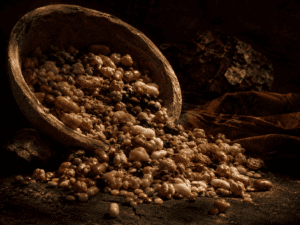
Beans, lentils, chickpeas, and peas make up the legume category, and every single one grows from a seed pod. This is the category most Christian men overlook completely, yet it may be the most practical of the five.
A review of plant-based nutrition found that beans lower blood lipids and reduce cardiovascular disease risk (National Institutes of Health). Beans also improve blood sugar control after meals because of their fiber, protein, and resistant starch. Additionally, beans deliver a serious amount of protein for a plant food, roughly 15 grams per cooked cup. Consequently, that matters if you are building muscle on a diet centered around seed-bearing plants.
Moreover, beans are inexpensive, easy to store, and simple to prepare in bulk. For example, a bag of dried lentils costs less than a fast food value meal. In fact, it can feed a family for days. Therefore, if you want one category to start with this week, start with beans.
Seeds
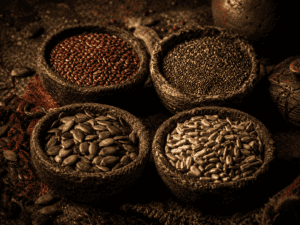
Seeds are the category people forget about, even though the word is sitting directly in Genesis 1:29. Flaxseed, chia seed, pumpkin seed, sunflower seed, and hemp seed all count. Each one is a concentrated nutritional package built to grow an entire plant from a single point.
Research on flaxseed shows it delivers alpha-linolenic acid, an omega-3 fat that supports cardiovascular protection (National Institutes of Health). Additionally, flaxseed carries lignans that support long-term metabolic health. Chia seed research shows a similar pattern. Chia’s fiber and omega-3 content links to improved cholesterol levels and better blood sugar control (National Institutes of Health). As a result, a small handful of seeds closes a nutritional gap most men never think to close. Specifically, one to two tablespoons is enough. Try adding it to your oatmeal or a smoothie.
Nuts
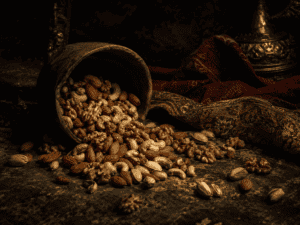
Nuts complete the list. Scripture groups them with the “tree yielding fruit” category. Most nuts grow enclosed in a shell that functions as their seed casing. Almonds, walnuts, cashews, pecans, and pistachios all qualify.
A review on nut consumption found that regular nut intake lowers LDL cholesterol and improves overall lipid profiles (National Institutes of Health). Similarly, that same intake lowers the risk of coronary heart disease. Interestingly, that same research found that nut consumption does not drive weight gain. It may even support weight loss instead. That contradicts the assumption that nuts are too calorie-dense to eat freely.
Portion still matters, however, so a single handful a day is enough to get the benefit without overloading your calories. Additionally, nuts give you a plant-based fat source. In fact, that fat source supports the muscle-building work covered in our guide to building muscle like Noah built the ark.
What About Grains and Other Plants?
Men searching Genesis 1:29 often ask where grains, rice, and oats fit into this picture. Specifically, wheat, oats, and rice all grow from a seed on a grass plant. In the broadest sense, they trace back to the same design God described in the beginning.
However, the version most men eat today looks nothing like the seed God named. Food companies strip, bleach, and reassemble a stalk of wheat into bread, cereal, and pastry loaded with added sugar. Similarly, corn shows up less as corn today. Instead, it shows up as syrup in a hundred other products lining the center aisles of the grocery store. As a result, that is a different food than the one Genesis 1:29 describes. It started from the same seed. However, it does not end the same way.
This is why fruits, vegetables, beans, seeds, and nuts are the clearest and least processed expression of Genesis 1:29. This blog centers on those five categories instead of every grain product marketed as whole grain. Therefore, when you choose a grain, choose it as close to its original seed form as you can find. Let fruits, vegetables, beans, seeds, and nuts carry the bulk of your plate instead. Spices, herbs, and coffee come up in the same conversation sometimes. However, they sit outside that foundation. They still have a place at your table. The verse names your foundation. Instead, it leaves the rest of your spice rack alone.
Why Science Confirms What God Designed First
Notice the pattern running through every category above. Scripture named seed-bearing plants first. Consequently, science explains afterward why God’s original design works.
Research shows that a whole-foods, plant-based diet built around these five categories improves blood flow in men with heart disease. Additionally, it improves blood sugar control in type 2 diabetes. Furthermore, it lowers the risk factors behind most chronic disease in America (National Institutes of Health). Meanwhile, most Americans are not even close to getting enough of what this category offers. Specifically, men need roughly 38 grams of fiber a day. In contrast, the average American adult consumes closer to 17 grams. That is less than half of what the body needs to function the way God designed it (National Institutes of Health).
That gap is not a mystery. In fact, the reason is simple. Processed food built in a factory has replaced seed-bearing plants grown from a seed. In fact, CDC data found that ultra-processed food now makes up more than half the calories adults in America eat (Centers for Disease Control and Prevention). As a result, that food strips out the fiber and nutrients seed-bearing plants naturally provide. That single statistic, ultimately, explains most of what is sitting on your waistline right now.
The Problem With How Most Men Eat Today
Here is the real issue, Stud. It is not that you do not know vegetables are good for you. You already know that. The problem, instead, is that modern eating buries seed-bearing plants under a mountain of conflicting advice.
One expert tells you to count calories. Another tells you to track macros. A third tells you carbs are the enemy, while a fourth tells you fat is the enemy. Meanwhile, the actual foundation is the one God named on the sixth day of creation. As a result, most men shove it to the edge of the plate as an afterthought.
USDA guidance recommends filling half your plate with fruits and vegetables at every meal (U.S. Department of Agriculture). In fact, that lines up almost exactly with what Genesis 1:29 established thousands of years earlier. Therefore, you do not need another app or another expert opinion to figure this out. Instead, you need to go back to the first instruction God ever gave about food and build from there.
Do Seed-Bearing Plants Give You Enough Protein to Build Muscle?
This is the question every man asks once he considers building his diet around seed-bearing plants. In fact, it deserves a straight answer. Beans alone carry roughly 15 grams of protein per cup. Pairing beans with nuts and seeds across a full day adds up faster than most men expect. For example, a cup of beans at lunch and a handful of almonds as a snack add up quickly. Add a tablespoon of chia in your evening meal. As a result, that stacks well past 40 grams of plant protein before you count anything else on your plate.
The research on beans already cited found consistent improvements in body composition markers (National Institutes of Health). Specifically, that happened when legumes replaced lower quality carbohydrates in a diet. Seed-bearing plants will not replace every source of protein in your life. This blog is not making that argument. What the research does show is different. Instead, a diet built on this foundation gives you a real, usable base to work from. It supports the training covered in our guide to muscle building instead of working against it.
One caution deserves mention. A diet that leans heavily plant-based can run low on nutrients like vitamin B12 in rare cases. If you are making a major shift, talk with your physician and get basic bloodwork done along the way. Wisdom is not weakness. Instead, it is part of stewarding the body God gave you well.
How Seed-Bearing Plants Became the Foundation of the Holy Diet
This is the exact discovery that changed my life. I sat in church that Sunday at 272.2 pounds. I made a list of every place Scripture already addressed food, fasting, and movement. Genesis 1:29 was at the top of it.
Ten days after I started eating according to what that verse says, I was down 10.8 pounds. Instead, that result came from eating exactly what God designed for my body. No industry sold me that first.
That discovery became the foundation of the Holy Diet, the eating framework inside Project Kingdom Gladiator. In fact, it centers entirely on what God named first: seed-bearing plants as the center of every plate. Want to see this structured into an actual daily plan instead of a loose idea? The Holy Diet lays it out step by step.
Make Seed-Bearing Plants Your Foundation, Not a Phase
Here is where most men go wrong with this information. They treat seed-bearing plants like a temporary fix instead of a permanent foundation. They eat clean for two weeks and see a result. Then they slide back into the same processed patterns that got them stuck in the first place.
Genesis 1:29 is not a 30-day challenge. Instead, it names the permanent way God designed food to work. The goal is building every meal, every week, around fruits, vegetables, beans, seeds, and nuts as the base. Add whatever else fits your convictions and your body around that foundation.
How to Start Today: A Simple Seed-Bearing Plate
Start simple. Try a handful of nuts and a piece of fruit at breakfast. Add a cup of beans and a side of vegetables at lunch. Finish dinner with a larger vegetable portion and a tablespoon of seeds. Repeat that pattern three times a day. As a result, it puts every one of the five categories on your plate without a single calculator or app.
Small, consistent additions build the kind of foundation that survives a bad week. That is the entire point. Want a structured way to reset your body around this exact principle before building the habit long term? The Adam Fast does exactly that. Our full guide to bible foods covers this in more depth. So does our guide to the biblical diet God designed from the beginning.
Genesis 1:29 was the verse that got me off the bench and back into the fight for my own health. What is one seed-bearing plant you are going to add to your plate this week? Drop it in the comments below.
Get the free 5-Day Kingdom Reset Challenge sent straight to your inbox:


Pingback: How to Break Food Addiction God’s Way
Pingback: The Powerful Holy Diet That Reveals What the Daniel Plan Never Taught You - TylerInloes.com
Pingback: What the Daniel Fast Does to Your Body